<< Back
6 Heart Healthy Dinners You’ll Actually Want to Eat
August 15, 2026
We all have a go-to dinner that tastes great in the moment, then leaves us feeling a little too full, tired or sluggish afterward.
But dinner doesn’t have to end that way. With the right mix of ingredients, your evening meal can be satisfying, good for your heart and still easy enough for a busy weeknight.
We asked Bradley Biskup, PA, a lifestyle medicine specialist with the Heart & Vascular Institute at Hartford HealthCare, for six heart healthy dinner ideas that are easy to pull together.
1. Grilled salmon with roasted veggies
It’s a restaurant quality meal that’s surprisingly easy to cook at home.
“Fatty fish like salmon are rich in omega-3 fatty acids, which help reduce inflammation and support heart health,” says Biskup. “And salmon is full of flavor, so it’s easy to create a delicious dish with.”
That also means you don’t need much to make it taste good. A little olive oil, lemon, garlic or your favorite herbs can go a long way.
Pair it with roasted vegetables and a whole grain like farro or brown rice for some extra fiber.
> Related: 10 Foods That Can Help With Hypertension
2. Chicken and vegetable stir-fry
You get all the takeout flavor without all the sodium or the price tag.
“Lean proteins like chicken breast provide essential nutrients without excess saturated fat,” Biskup says. “And it’s hard to beat a meal that can be cooked in just one pan.”
Toss in whatever vegetables you have on hand, like broccoli, peppers, carrots or snap peas, and you’ve got an easy way to add more color and nutrients to your plate.
Cook everything in olive or avocado oil, then keep the sauce light. Lower-sodium soy sauce or a simple homemade sauce can help you control how much salt ends up in the meal.
> Related: What Nutritionists Eat When They Don’t Feel Like Cooking
3. Lentil or bean-based chili
Comfort food isn’t always known for being heart-healthy. But chili can be an exception.
“Beans and lentils are high in fiber, which helps lower LDL or ‘bad’ cholesterol,” says Biskup. “They’re a great substitute for the starchy carbs you might be used to.”
Add plenty of vegetables, use lean ground turkey if you want meat or skip it altogether for a vegetarian option. And instead of relying on salt, build flavor with spices like chili powder, cumin, paprika and garlic.
> Related: Make Your Grocery Trip Instantly Healthier With These 5 Swaps
4. Whole grain pasta with tomato sauce and vegetables
Good news: Pasta made the list.
“If you keep an eye on ingredients, you never have to give up your favorite foods,” says Biskup. “If you want to keep this dish really light, try making your own tomato sauce to cut down on sodium.”
The key is what you pair with it.
Choose whole grain pasta for extra fiber, stick with tomato-based sauces instead of creamy ones, and toss in vegetables like spinach, mushrooms or zucchini.
If you want more protein, you can also add beans, lentils, grilled chicken or a small amount of cheese.
5. Baked tofu or tempeh bowls
A plant based bowl like this doesn’t just make a delicious dinner, it makes delicious leftovers too.
“Plant proteins can help reduce saturated fat intake while still providing plenty of protein,” says Biskup. “And these bowls are easy to prep in bulk for a satisfying lunch the next day.”
Start with quinoa or brown rice, then add roasted vegetables and baked tofu or tempeh.
From there, you can change the flavor depending on what you’re in the mood for. Add herbs, spices, a squeeze of lemon or a drizzle of tahini or olive oil for some healthy fat.
> Related: 8 Common Nutrition Myths – And the Truth Behind Them
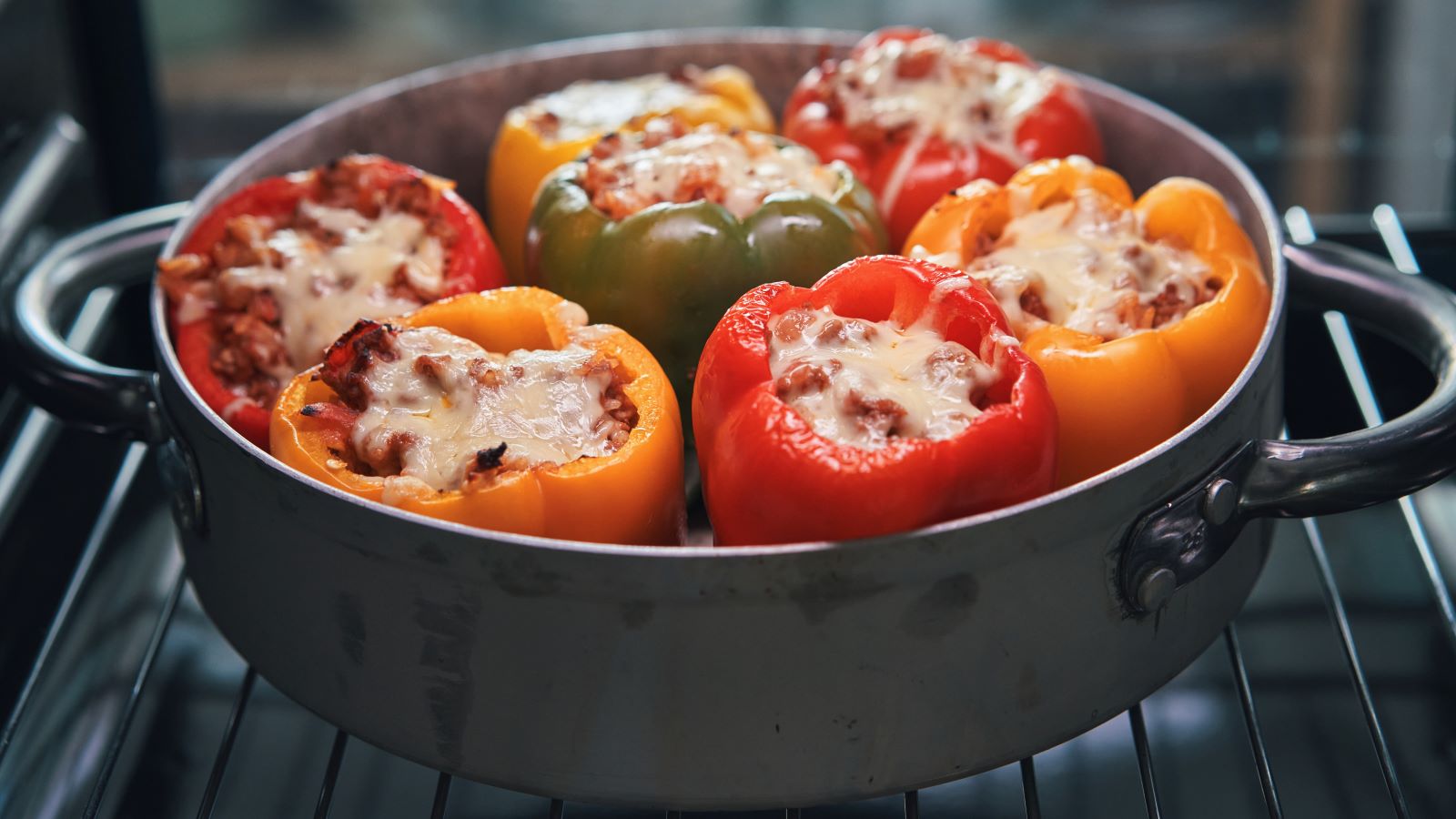
6. Turkey or veggie stuffed peppers
Stuffed peppers look impressive on the plate, but they’re easier to make than you might think.
“Using lean turkey or beans helps keep saturated fat lower,” Biskup notes.
Start by filling bell peppers with a mix of whole grains, vegetables and your protein of choice. Lean turkey works well, but beans or lentils can make an easy meatless version.
Then bake until the peppers are tender and the filling is warmed through.
> Related: 7 Condiments You Should Always Keep in Your Kitchen
The key to a great dinner
It’s not about eliminating your favorite foods, it’s about building a balanced plate around them.
“Be sure to include a lean protein, healthy fats and fiber rich carbohydrates. And add plenty of vegetables for some extra nutrients, color and satiety,” says Biskup.